

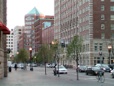
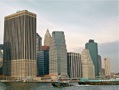
Why Build Tower Towns?
Shrinking cities to their most workable size reduces the human burden on the natural world. I believe Tower Towns will become powerful examples proving we can live better while consuming less of the worlds resources per capita.
Tower towns are communities by design. They consist of a cluster of mutually supporting, mid rise to high rise buildings. From social activities to food production, these communities do it all. People who live in tower towns do not need a car to live well. Although much of their life needs can be met within the tower town complex, these communities are well connected to the cities they exist in by various kinds of transit systems.
Tower Towns are almost like giant space ships resting on the land. They process their own waste, grow their own food, generate their own energy and provide life support for their citizens. They are true global “villages” because they are well connected to the rest of the world by modern communication systems. They help absorb the impact of burgeoning world populations and they do all this with renewable energy!
Urban growth boundaries are crucial in a world sprawling beyond reason. As the city grows, the per capita energy cost of living rises. People travel farther to get to activities and traffic problems on congested streets are a fact of life. Tower Towns built within the boundaries of existing cities help enforce an urban growth boundary by design instead of by legislation.
Flatscape cities (sprawling, low rise, cities) are causing serious weather problems because they transduce visible light into heat energy. They also demand vast energy resources to bring food to the city from distant farms.
Sprawling cities have impervious surfaces that force rainwater to flow towards rivers, lakes and oceans. Tower Towns capture rainwater and reuse it many times over. Ultra conserving water reclamation systems may make it possible for Tower Towns to become exporters of water instead of importers.
Power toilets in Tower Towns may make flushing with water obsolete. We avoid many problems plaguing modern cities when we can flush toilets with desiccants instead of water.
Proximity Power is the ability to live close to your help. The energy cost of living drops dramatically when you live within easy walking distance of the source of your food or anything else that supports your life. Tower Towns achieve this with clusters of mid rise to high rise buildings that have upper level connections between them.
Designed for populations ranging from five to ten thousand people, Tower Towns can be built in places too difficult for other kinds of city structure. They can be a form of urban renewal within the city and they can be built between cities.
Tower Towns are very accessible to their citizens. Their design encourages walking and bike riding to get to activities. Elevators, h-vators, and Segways may also be commonplace. Because everything is so well connected, the private automobile is not needed.
Global warming is perhaps the most serious problem future generations will have to contend with for a very long time. Shrinking the footprint of the city and minimizing per capita energy requirements without sacrificing quality of life may prove invaluable in the fight against runaway greenhouse effect.
We may be seeing ever more need for disaster relief for large populations in the future. Many people have been made suddenly homeless by natural disasters and human caused problems. Tower Towns can be a way of helping people made homeless have a place to live. *****
***************
Welcome to Imagine City Audio Topics Global Renaissance
Moving Fast Empower City Renewable Cities Connect City
Human Scale Cities Super City Tower Towns Design Considerations
Restructuring for Activists Sustainability Indicators Subsidy by Design
Linear City Concepts Network Megalopolis Urban Agriculture
High Rise Greenhouses Magnetic Levitation Trains City Links
